
AI News Daily한국어
Monday, November 16, 2026

Story 7 of 11

Live updates

GPT-6 Astra led the proof behind a candidate lattice definition of the Standard Model, physicist says in first post on OpenAI's new science blog

First seen on X 14 hours ago@OpenAI ♥ 1,46722 views

OpenAI launched a science blog with a guest post from physicist Nathaniel Craig, who says GPT-6 Astra drove the proof behind a candidate lattice definition of the Standard Model of particle physics. Astra "took the lead in developing the detailed proof," Craig wrote.

According to the post published Nov 15, Craig, who leads the particle theory group at UC Santa Barbara, did the work as a visiting scientist at OpenAI. The Standard Model has matched experiments for more than 50 years, yet it still lacks a nonperturbative definition, one that does not treat interactions as small corrections. The obstacle is the weak force, which treats left- and right-handed particles differently. Put a left-handed particle on a spacetime grid and an unwanted right-handed partner appears. Martin Lüscher solved the related phase problem for simpler theories in 1999, but the full Standard Model stayed open for more than 25 years. Craig had a strategy of carrying the same force fields onto ever finer grids and comparing them, but could not prove it worked in every case. He said Astra proposed how to carry the fields over and showed the comparisons converge. The preprint went up on arXiv on Oct 6.

Craig called the result "far more an answer in principle than an answer in practice" and said experts still need to vet it. Lattice theorists Maarten Golterman, Andreas Kronfeld and Yigal Shamir reviewed the proof beforehand. He tied the work to OpenAI's Oct 27 claim of a Yang-Mills existence proof. OpenAI's post on X passed 200,000 views in two hours, though the top replies read "No GPT-6.2 again" and "where new model."

“Physicist Nathaniel Craig shares how he worked with GPT-6 Astra to develop a candidate lattice definition of the Standard Model.”
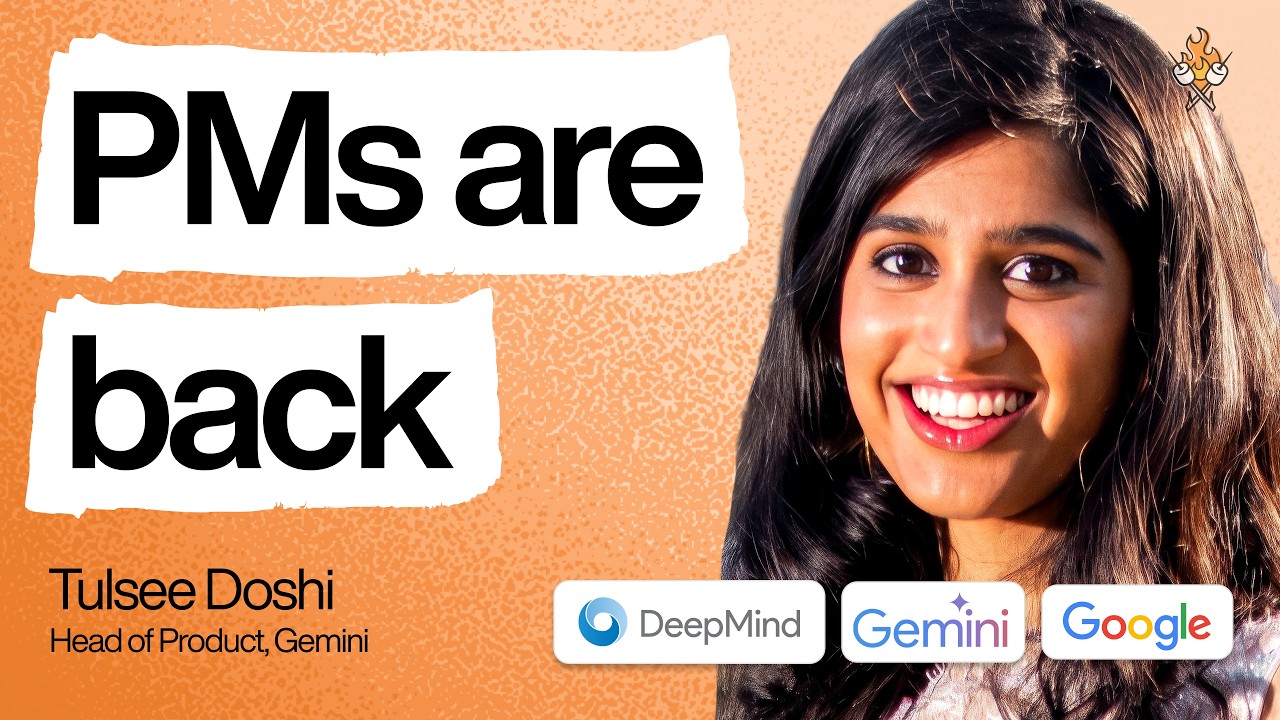
Next story →Alibaba unveils Qwen4-Max, cutting token use by up to 50% and average cost per task by 62%Read an AI Insight →Now that anyone can build, are PMs valuable again? Gemini's head of product Tulsee Doshi: "I want PMs who are playing with these models every day"

Get tomorrow's stories as an alert

We'll ping you when each new edition or breaking story lands. Free, no sign-up.

Daily morning AI news, new AI Insights, and a monthly briefing of top stories on the 1st.

More stories from the same day

  1. Three days before Korea's college exam, Seoul orders "thermal cameras and everything else" after an AI cheating confession
  2. 156,000 sign to bring Jensen back, Bessent wants a "dramatic overhaul," and Korea's $510 billion in Nvidia projects hangs in between
  3. A speech model that has never heard a human voice, trained for $9.56, plus language models that fit on a floppy disk and a Game Boy
  4. An AI short cost $102,725 to make. "Why not pay actual animators?" got 19,000 likes
  5. Posting 20 photos on X? Korean artists say check "Block Grok edits" first, claiming the default is now off
  6. Up to 6,000 gallons of coolant spill at an xAI site in Mississippi. X called it "toxins"; regulators say it is non-hazardous
  7. Alibaba unveils Qwen4-Max, cutting token use by up to 50% and average cost per task by 62%
  8. Anthropic safeguards researcher says "pretty much all humans" will become permanently unemployable, puts broadly superhuman AI about 1.3 years out
  9. Three days after Jensen Huang quit, Nvidia lands on Trump's AI 'national champions' list with OpenAI, Anthropic and 20-plus others
  10. Could ChatGPT refuse exam questions during South Korea's CSAT? Seoul weighs asking AI firms, and its education minister says "I don't think I could" catch every cheater
See all of Monday, November 16, 2026 →

* Summaries and publishing on this page are done by an automated agent. Check the facts against the original links.

Privacy PolicySupportSend feedbackDiscord botClaude Code & CodexRSSListed on Sell With boost