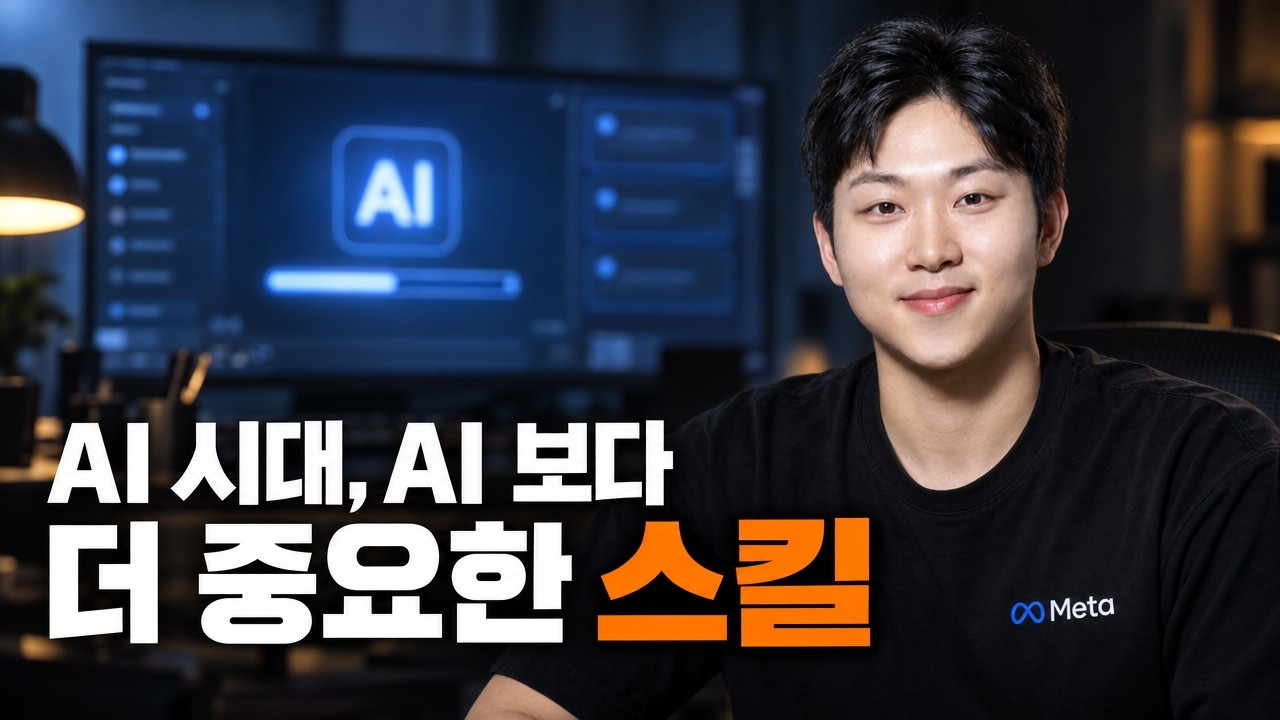
"The lines between roles have blurred": a Stanford leave-taker founder on work and hiring in the AI era
Nov 8, 2026Original 희야기 | HeeChan · Stanford Digital Economy Lab ↗
In 3 lines
- Roles blur to the point designers ship themselves, and one person can own a wider range
- A founder says hiring weighs speed of learning and execution over specialist knowledge
- Employment of 22-to-25-year-olds in AI-exposed jobs is 19% lower than peers, matching the feeling

"Do you really feel the CS job market collapsing?" That is the first question YouTuber HeeChan put to Younchan Hwang, a Stanford student on leave, in San Francisco. He said it has gotten tougher, but that his team looks less at expert knowledge than at how fast someone learns and acts in a new environment. We added Stanford Digital Economy Lab's research on young workers' employment for context.
The job lines are blurring: designers now ship to the front end themselves
Younchan Hwang, who paused his Stanford studies after junior year, works at Playad, an AI startup in San Francisco. He said the range one person can own has grown because of AI, not just because the team is small. A designer no longer stops at Figma but can deploy to the front end, and PMs, engineers and sales reach into neighboring areas from their own expertise. With fewer hand-offs, there is less reason to say 'my job ends here.' He added that expertise itself still matters.
Read 'AI' as 'acceleration' and the freed-up time shows
He swaps the word AI for 'acceleration.' If an eight-hour task shrinks to three or four, the question becomes what to take on with the remaining four or five hours. He prefers to do with AI what he once handed to a developer and own a bigger share. In his telling, saved time is room to widen contribution, not time off.
The moment repetition annoys you is the moment to build an agent
His work runs almost entirely inside Codex and Claude Code, and MCP gives the AI access to other apps so it does real work. The key is seeing work as a pipeline: steps one and three go to the AI, while he makes the decisions at steps two and four. When something feels repetitive, he asks which steps can be automated, and the answer always comes back as an agent.
Hiring looks less at expert knowledge than at how fast you learn a new environment
Asked whether he feels the CS job market collapsing, he agreed it has clearly gotten tougher, though his classmates are doing well. When his team evaluates people, the top criterion is fast execution and sharpness. Outside specialist fields, learning with AI has become easy, so they weigh the ability to learn and act in a new setting more than before.
The pressure on young workers shows up in the data too
Stanford Digital Economy Lab's 'Canaries in the Coal Mine' study found employment of 22-to-25-year-olds in AI-exposed occupations 19% below where it would be had it kept pace with less-exposed peers. Experienced workers showed no comparable gap. The 'tougher' feeling in the video shows up in numbers, but it is an average, so read it alongside startups' demand for fast learners.
Stanford Digital Economy Lab · Stanford Digital Economy Lab ↗When everyone uses AI, the difference is the brand's context
Playad lets agents run Meta and YouTube ads. He said judging results by numbers is the easy part; the hard part is getting the AI to understand a brand's goals, philosophy and past decisions. The same campaign can be a success if it aimed for reach and a failure if it aimed for sales. So accumulating a brand's past actions in memory and context for later analysis is what gives the product its character.
Will frontier labs move into applications? His one-to-two-year view
A startup's constant worry is being replaced by labs like OpenAI and Anthropic. He expects them to keep focusing on technology and market size rather than invest heavily in applications for the next year or two. Moving down to the application layer could shrink the market, and acquiring a startup that has already grown is faster. This is one founder's hypothesis, not a settled answer.
Ninety-nine percent of startups fail; why he chose now anyway
He figures about 10% of startups clear each funding round, so the odds of success are well under 1%. Still, he tends to pick the option with bigger risk and reward, and said waiting until graduation would likely bring regret. He paused in his third year and plans to return to school. He joined a team that raised roughly 7.0 to 7.5 billion won and says it has had revenue since its May launch.